
The best exhibition stand designers do more than create impressive visuals. They help you develop your brief, make the most of your budget and deliver a stand that works for your business. Motive Exhibitions shares ten things to look for in an exhibition stand designer or contractor. They include practical design experience, project management, build quality and customer service.
Ten things to look for in an exhibition stand designer
- They ask why you’re exhibiting before they start designing.
- The stand design works for your products, your team and your visitors.
- The quotation includes everything shown in the design.
- They advise whether to buy or hire based on how often you exhibit.
- You can see the quality of the build before the exhibition.
- They manage the project, from paperwork to installation and dismantling.
- Show or venue experience helps, but experience of your type of project matters more.
- Their timescales are realistic, around four to five months for a standard stand.
- You know who manages your project and who to call if something goes wrong.
- They can tell you where your stand is stored between shows.

Choosing the right exhibition stand designer
Choosing an exhibition stand designer isn’t just about finding someone who can produce an impressive 3D visual.
You need a company that understands what you’re trying to achieve, knows how to turn a design into a working exhibition stand and can manage everything required to get it ready for the show.
Over the years, we’ve heard some extraordinary stories from businesses looking for a new trade show stand contractor. Stands have gone missing in storage and graphics have peeled off walls during exhibitions.
We’ve combined those experiences with advice from our design and project management teams to share ten things worth considering when choosing an exhibition stand designer.
1. Do they ask the right questions in the first call?
A good exhibition stand designer starts by asking what you want the exhibition to achieve.
One of the first questions David Hennessy, Managing Director at Motive Exhibitions, asks is: “Why are you going?”
Are you launching a product, generating sales leads, meeting existing customers or demonstrating machinery? What would make the exhibition a success?
The answers influence everything from the layout of your stand to how you spend your budget. And don’t worry if you haven’t got a fully developed design brief. Many exhibitors know what they want to achieve but aren’t sure what their stand should look like. An experienced exhibition stand designer should draw that information out of you and suggest ideas you hadn’t considered.
We’ve spoken to businesses disappointed by their previous designer’s lack of creativity. They’d waited excitedly for a proposal, only to receive something remarkably similar to their previous stand.
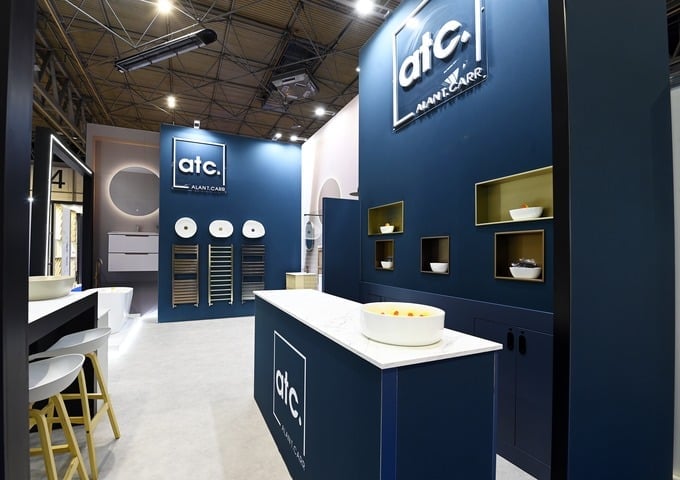
A great stand design comes from understanding your business, products, objectives and budget, rather than simply filling the available floor space. That’s something Carly, a buyer at Alan T. Carr, experienced when she appointed us to design and build the company’s stand at InstallerSHOW. “This is exactly what we were looking for, but we didn’t know it.” Carly felt we’d understood their requirements from the first conversation, and the business made very few changes to the initial design proposal.
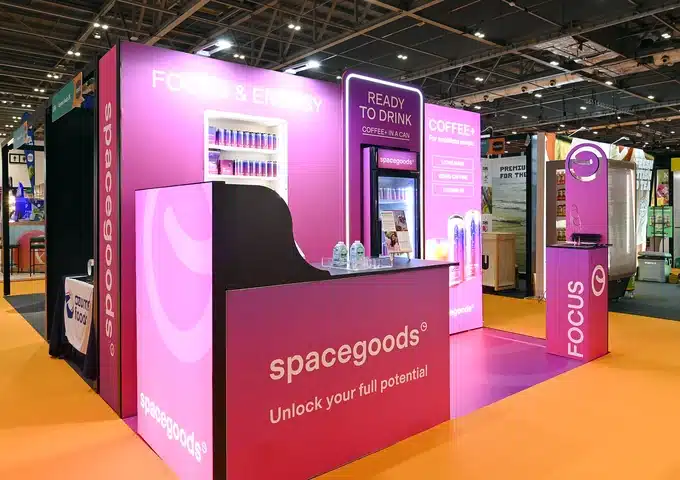

If your accreditations are important to your audience, make sure they can be seen.”
David Hennessy, Managing Director, Motive Exhibitions
2. Will the exhibition stand design work for your business?
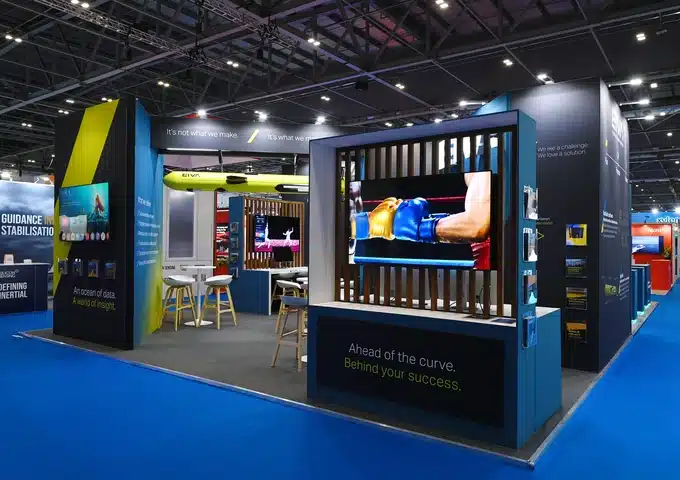
Experienced trade show stand designers think about how visitors will approach the stand, what they’ll see and how your team will use the space.
“If you’re planning to distribute hundreds or thousands of samples, your designer should ask how they’ll be stored and replenished. Without sufficient storage, staff could spend 20 to 30 minutes away from the stand collecting more stock,” says Edward Marshall, Creative Director at Motive Exhibitions.
That’s time they could be spending talking to potential customers.
Machinery demonstrations bring different challenges. Visitors need to see what’s happening, with enough room for demonstrations to take place safely.
Following a visit to MACH, David observed how some exhibitors had made relatively small demonstrations visible from across the aisle, while others had tucked important messages and accreditations where visitors were unlikely to notice them.
Read our observations from MACH 2026.
Elements can appear to float in mid-air, whilst the bits that would hold them up aren’t there at all. What looks impressive in an image may not work from an engineering or structural perspective.”
Edward Marshall, Creative Director, Motive Exhibitions
What about AI-generated exhibition stand designs?
We’re receiving more AI-generated exhibition stand visuals from businesses looking for quotations. Some look great, but when our design team examines them, they’re simply not possible to build.
At Motive Exhibitions, everyone who designs stands has also spent time building them on the exhibition floor, and they’re often still out building at busy shows. That practical experience informs the design before the client receives the first 3D visual.
Our team considers materials, construction methods, structural requirements and venue regulations, as well as whether a stand can be reconfigured and reused.
Depending on the design, there may also be technical drawings, structural calculations and organiser approvals to consider. If a design doesn’t meet the venue’s requirements, it may not be approved for construction.
An experienced exhibition stand designer, like us, should understand what’s physically possible and design around those requirements from the outset.
3. Are they helping you make the most of your exhibition budget?
The right designer helps you spend your budget well. They will make clear what’s included in the quotation and what costs extra.
When you approach several exhibition stand companies, you’ll probably receive very different proposals.
Each company will interpret your brief and suggest how to use the available space and budget. One might recommend a bespoke stand, another a modular rental system, or a combination of the two.
What matters is whether the proposal delivers what you need for the money you’re spending.
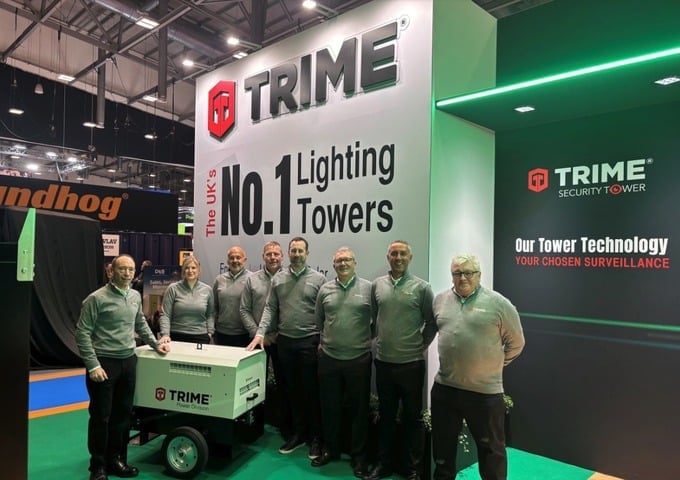
Check what’s actually included in the quotation
One customer told David Hennessy about falling in love with a proposed stand design from a competitor, only to discover that several of the elements weren’t included in the quotation.
By the time they realised, the exhibition was approaching and they’d already committed to a programme of stands with that contractor.
When comparing proposals, check that everything shown in the design is included in the price, and understand what you’ll need to pay for separately.
That includes checking whether the quotation covers design, manufacture, project management, transport, installation, dismantling and storage.
You’ll also want to establish who pays for venue services such as electrics, rigging, internet and any specialist lifting equipment. Some of these costs are paid directly to the organisers rather than the stand contractor.
And remember to allow for your own exhibition expenses, including staffing, travel, accommodation, marketing materials and samples.

Don’t spend your entire budget on floor space
Edward highlights another problem: exhibitors committing most of their budget to floor space before they’ve considered what it will cost to build a stand.
“You could spend 60% of your budget on exhibition space and 40% on the stand, or spend 90% on the space and leave yourself just 10% for the stand,” explains Edward.
It’s an illustration rather than a fixed formula, but a smaller space with a better-designed stand may achieve more than a large space you can’t afford to use effectively.
If possible, speak to your exhibition stand designer before booking your floor space. They may be able to advise on the size, layout and best positions in the hall.

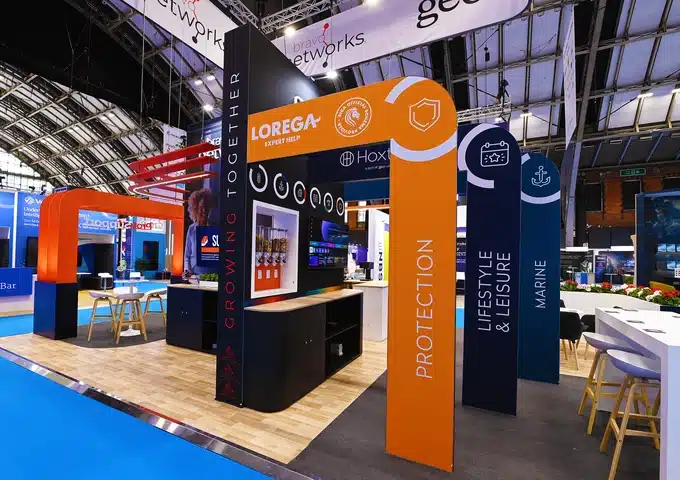
4. Should you buy or hire an exhibition stand?
David Hennessy’s general advice is that buying an exhibition stand can make sense if you’re exhibiting more than three times a year. Exhibition stand hire or rental is often more suitable for fewer shows.
Even exhibitors who own their stands may hire individual components, such as furniture, fridges, lighting, reception desks and audiovisual equipment.
Planning to exhibit at several shows? Ask your designer about modular exhibition stand rental, reusable components and reconfigurable designs.
The best solution depends on your exhibition programme, budget and what you need the stand to do.
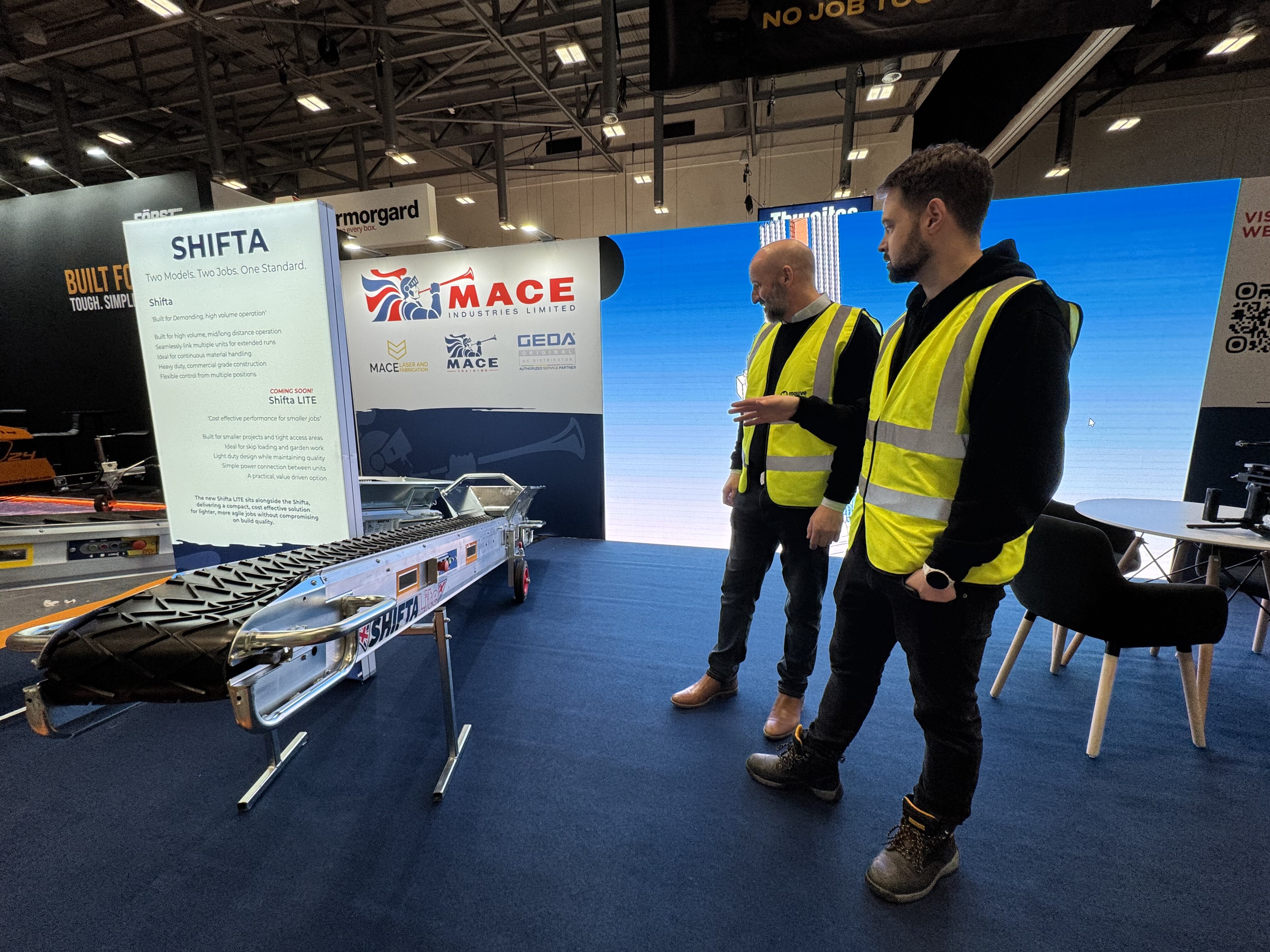

If you’re exhibiting more than three times a year, buying an exhibition stand can make financial sense. Otherwise, hiring is often the better option. Modular systems give you the flexibility to reconfigure your stand for different exhibitions, while custom elements can give it a more personalised, premium finish.”
David Hennessy, Managing Director, Motive Exhibitions
5. Can you see the quality of their work before the exhibition?
Look for evidence of build quality before the exhibition, not just photographs of finished stands.
Imagine arriving at an exhibition the day before it opens and discovering your stand looks nothing like you expected.
It’s happened to businesses we’ve spoken to, and David has witnessed some uncomfortable conversations on neighbouring stands when exhibitors see the finished result.
Another customer inherited an exhibition stand when she started a new role. At the first few shows, the graphics repeatedly peeled away from the walls.
Her team spent the exhibitions trying to stick them back on, and by the end of each show the stand looked a mess.
She was reluctant to change contractors because of the money already invested in the stand. Eventually, the frustration became too much.
Unless there’s been an act of God, such as a flood or cyclone, there’s really no excuse for graphics repeatedly falling off your stand.
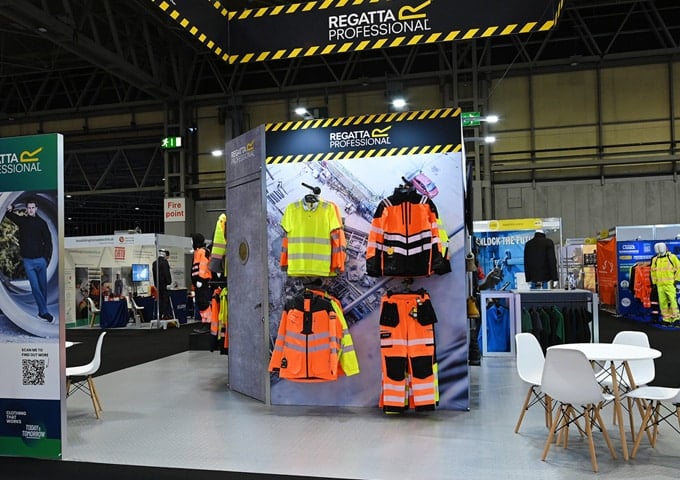
When considering a new contractor, look beyond the photographs of completed stands. Ask about materials, graphics, workmanship and how the company checks the finished build.

Why ask about a pre-build?
A pre-build allows an exhibition stand to be assembled and checked before it reaches the venue.
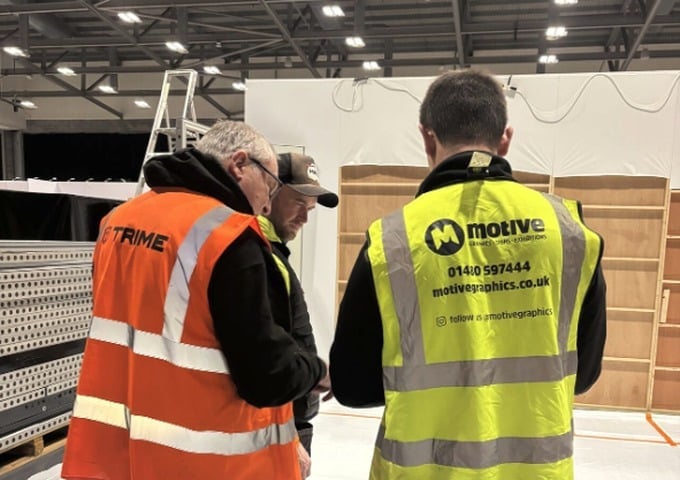
It’s an opportunity to identify snags, check the graphics and make sure the finished stand matches the approved design.
Where we pre-build a stand, we invite the customer to visit our workshop and see it. For one customer’s largest stand at the Executive Hire Show, the team visited our workshop to see the stand before it was transported to the exhibition.
Watch the stand build process video.
Not every contractor offers a pre-build, so it’s worth asking what quality checks take place before installation.
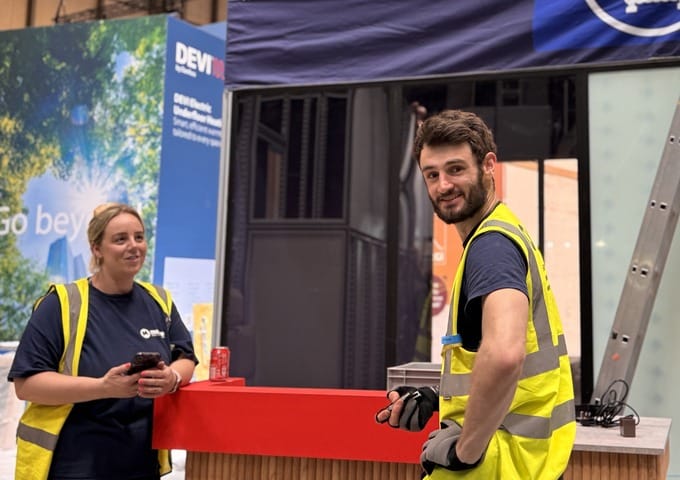
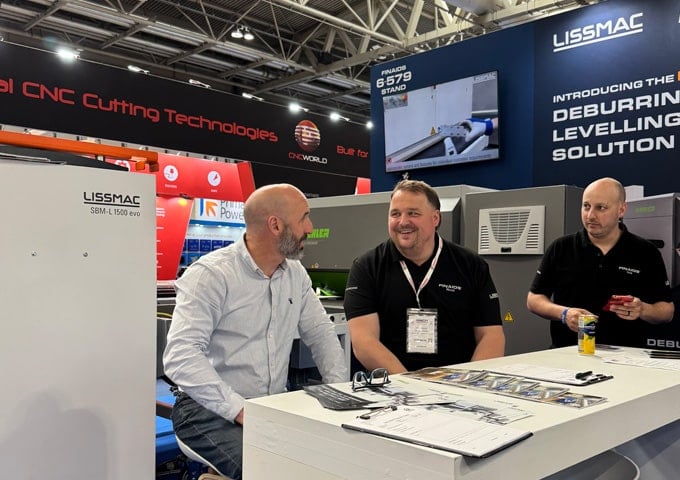
You should be able to turn up in the exhibition hall and everything is done and ready for you to add the finishing touches and start welcoming visitors to your exhibition stand.”
Edward Marshall, Creative Director, Motive Exhibitions
6. What exhibition stand project management is included?
Your contractor should manage the project for you, from organiser forms to installation and dismantling.
We’ve heard from businesses changing exhibition stand contractors that they felt they were doing all the project management themselves.
They were chasing deadlines, sending emails, making phone calls and trying to find out what was happening, despite paying someone else to manage the project.
“I’m reminding our clients when we should be starting to think about the next exhibition, not the other way around. It’s about making your life a bit easier,” says Edward.
There’s a lot happening behind the scenes that exhibitors shouldn’t have to manage themselves.
Depending on the stand, your trade show stand contractor may need to handle organiser forms, risk assessments and method statements (RAMS) and structural calculations. They may also deal with venue approvals, electrical services, rigging, transport, machinery handling, installation, dismantling and storage.
Different contractors offer different levels of project management support, so it’s worth establishing exactly what’s included, who’s responsible for each element and who your main point of contact will be.
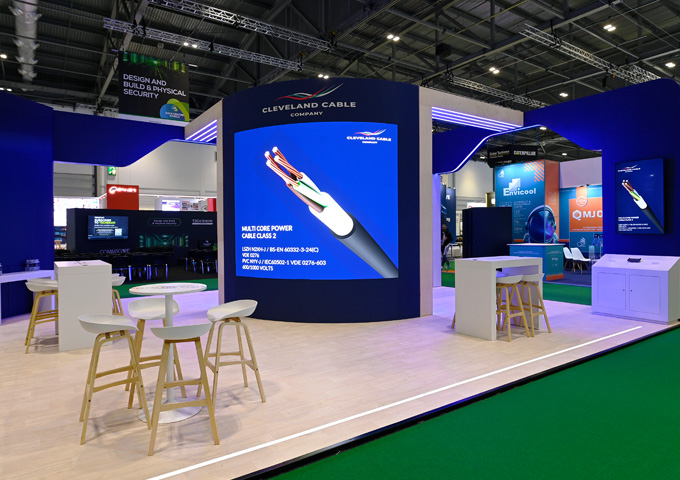
What happens during an exhibition stand installation?
In the UK, contractors often have just two or three days to get everything built before the show opens. European exhibitions generally allow longer.
Exhibition halls are chaotic in the days leading up to a show. You’ve got hundreds of contractors building stands, lorries arriving, forklifts moving machinery around, and everyone trying to get finished before the doors open.
Add large machinery, suspended structures or complicated audiovisual installations, and there’s plenty to coordinate.
That’s why it’s worth asking who will be managing the installation and what happens if something needs sorting out before the doors open.

What happens when the exhibition finishes?
The dismantling period is considerably shorter than the time allowed to build the stand.
“Whilst there is time before the show for set-up, the dismantle is much quicker and the time contractors have to get a stand down and out is much less,” says David Hennessy.
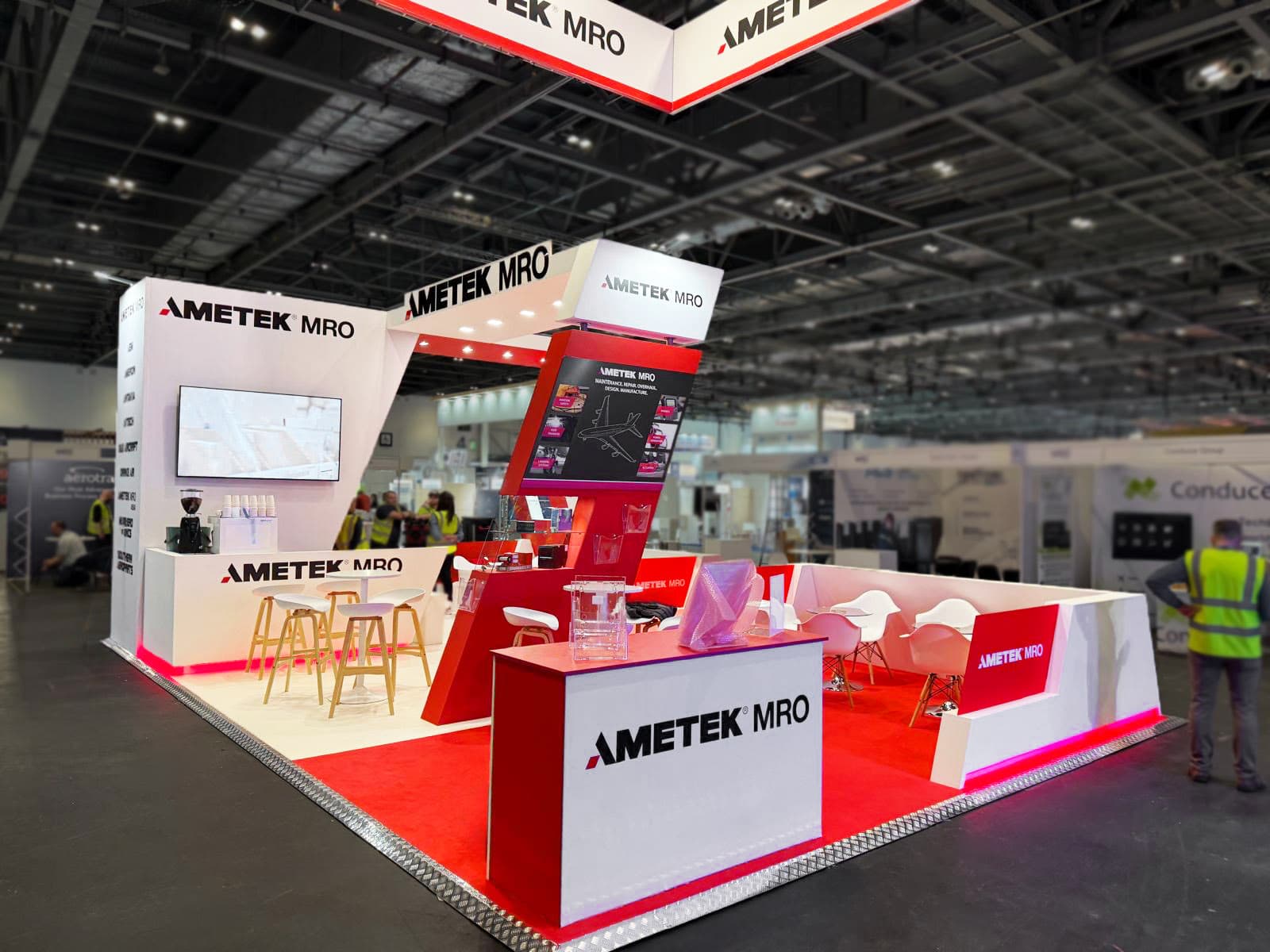
What about taking an exhibition stand from the UK to Europe?
International exhibitions add another layer of planning, particularly around transport, customs and venue requirements.
For temporary exports from the UK, an ATA Carnet may be needed for exhibition stands, equipment or other goods being taken overseas and returned afterwards.
An experienced contractor should understand the documentation required and coordinate the arrangements with the relevant freight and logistics partners.
Read our guide to taking an exhibition stand from the UK to Europe.
Watch Edward Marshall explain what to look for in an exhibition stand builder.
7. Does your exhibition stand contractor need experience of the show or venue?
Not necessarily.
Previous experience can certainly help. A contractor who knows the show may already be familiar with the organisers, build times, access arrangements and any unusual venue requirements.
They may also know how visitors move around the exhibition and what other brands have done at previous events.
But Edward points out that some of our biggest and best stands have been delivered at shows and venues we’d never worked at before.
What’s more important is whether the contractor has the experience to manage your particular project.
If you’re exhibiting heavy machinery, for example, experience transporting and installing that equipment may matter more than whether they’ve previously built a stand at the same exhibition.
Ask how they’ll approach an unfamiliar venue, who will deal with the organisers and how they’ll identify any additional requirements.
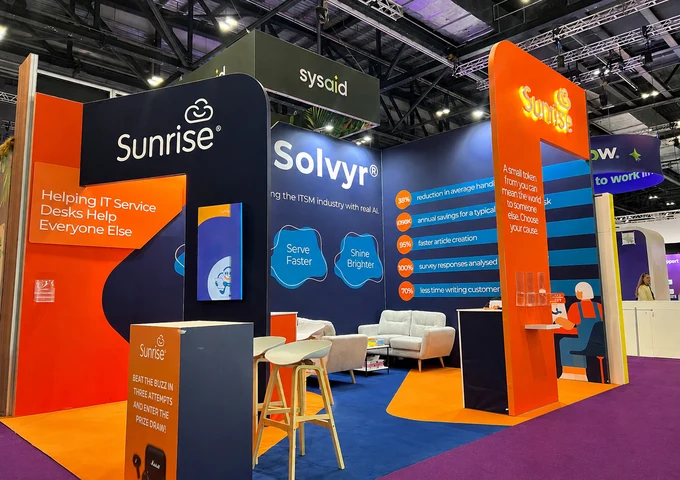
8. Are they giving you realistic timescales?
David recommends allowing around four to five months to plan a standard exhibition stand, and nine to twelve months for a large overseas exhibition.
That allows time for the brief, design development, quotations, approvals, manufacture and all the arrangements needed before installation.
There’s also something businesses sometimes forget when appointing a new supplier: their own procurement process.
Setting up a contractor as an approved supplier and arranging a deposit payment can take several weeks, sometimes around a month. It’s worth factoring that into your planning, particularly if you’re changing exhibition stand companies.
You don’t need a finished brief before making contact. In fact, speaking to a designer early may help you decide what you need.
Watch David Hennessy discuss how far in advance to book an exhibition stand company.
9. Are they a reliable team you can work with?
Look for a team where the quality of service doesn’t depend on one person, and ask who will manage your project.
One customer told us she’d reached the point where she thought the office dog was getting more attention than she was.
Not exactly what you want when you’ve entrusted someone with your exhibition stand.
We’ve also spoken to businesses whose previously excellent service deteriorated after a trusted account manager left. People change jobs, of course, but the quality of service shouldn’t depend entirely on one individual.
Ask who will manage your project, who you’ll speak to if something goes wrong and how the company keeps customers updated.
What do their customers say?
Customer testimonials are worth checking, but don’t just take the glowing reviews at face value. Look at who’s providing them. Are they established businesses? Have they worked with the contractor on more than one exhibition?
If you’re considering appointing a new exhibition stand designer, ask whether you can speak to an existing customer. It’s an opportunity to find out what they’re really like to work with, how well they communicate and whether they’d recommend them.
10. What happens to your exhibition stand between shows?
Your exhibition stand company should know where your stand is between shows and be able to explain how it’s stored, recorded and maintained.
One of the more extraordinary stories we’ve heard involved a customer whose previous contractor had lost a 6m x 6m exhibition stand.
It wasn’t the first time parts of their stand had gone missing.
If you’ve paid for an exhibition stand and entrusted someone to store it, you’d reasonably expect them to know where it is.
Ask where your stand will be stored, how the components are recorded and what happens if something needs repairing or replacing.
If you’re exhibiting regularly, the contractor should also be able to discuss how your stand can be maintained, refurbished and adapted for future exhibitions, including the costs involved.
If you’re renting, you won’t have to worry about storing and maintaining the hired components between shows.

What if your exhibition stand contractor goes out of business?
Unfortunately, we’ve also heard from businesses whose exhibition stand contractors have gone into administration.
It’s particularly worrying when the contractor is storing a stand you’ve paid for.
David Hennessy has previously described how we’ve helped businesses recover their exhibition stands after another contractor ran into financial difficulties.
Before appointing a company to store your stand, make sure you understand which components you own, how they’re recorded and what arrangements are in place if you want to move them elsewhere.
If a contractor enters administration, you may need to deal with the administrators and provide evidence of ownership to recover your assets.
Ready to talk to a new exhibition stand company?
- Book a consultation and tell us your ideas.
- Explore our case studies and get inspired by what’s possible.
- Visit our exhibition stand services page to learn more about our work.
Motive Exhibitions, 3 Orion Court, Ambuscade Road, Colmworth Business Park, Eaton Socon, St. Neots, PE19 8YX